
The 2-Day Angkor & Village Tour offers travelers a comprehensive glimpse into Cambodia’s rich cultural heritage. Highlights include the iconic Angkor Wat, where visitors can witness a stunning sunrise, and the exploration of ancient temple complexes that showcase the region’s architectural mastery. On the second day, the tour shifts focus to the local community of Kompong Phluk, providing an immersive experience in traditional Cambodian village life. With its carefully curated itinerary, this tour promises an unforgettable journey that seamlessly blends the historic wonders of Angkor with the vibrant tapestry of Cambodian culture. There’s certainly more to uncover about this captivating 2-day adventure.
Key Points
- This 2-day tour offers a comprehensive experience, visiting the iconic Angkor Archaeological Park and immersing in Cambodian culture through a village interaction.
- The first day focuses on exploration of key Angkor temples, including Bayon, Ta Prohm, and Angkor Wat, culminating in sunset views at Phnom Bakheng.
- The second day starts with an early morning visit to Angkor Wat for sunrise, followed by visits to Banteay Srei, Banteay Samre, Pre Rup, and the floating village of Kompong Phluk.
- The tour includes hotel pickups, English-speaking guides, temple passes, meals, and air-conditioned transportation, providing a hassle-free and immersive experience.
- The tour is not suitable for young children or wheelchair users, as it involves extensive walking and exploration of uneven terrain.

👉 Check out our guide to the 20 Best 2 Day Tours In Siem Reap
Contents
- Key Points
- Tour Overview
- Day 1 Itinerary
- Angkor Archaeological Park
- Bayon Temple and Baphuon
- Ta Prohm Temple and Terrace of the Elephants
- Angkor Wat and Phnom Bakheng
- Day 2 Itinerary
- Banteay Srei and Kompong Phluk
- Frequently Asked Questions
- Can I Bring My Own Food and Drinks?
- What Languages Does the Tour Guide Speak?
- Is There a Dress Code for the Temples?
- Can I Extend the Tour for an Additional Day?
- How Many People Are Typically in a Tour Group?
- Recap
- Our Top Picks in Siem Reap
- More 2-Day Experiences in Siem Reap
- More Tours in Siem Reap
- More Tour Reviews in Siem Reap
- Not for you? Here's more things to do in Siem Reap we have recnetly reviewed
Tour Overview
The 2-Day Angkor & Village Tour offers an immersive experience exploring the ancient wonders of Angkor Archaeological Park and the local village life in Siem Reap, Cambodia.
This private tour includes hotel pickups, an English-speaking guide, temple passes, meals, and transportation in an air-conditioned vehicle.
Over two full days, visitors will see iconic sites like Bayon, Ta Prohm, and the magnificent Angkor Wat, as well as venture to the stilted village of Kompong Phluk.
With an average rating of 5.0 from 8 reviews, this tour provides an in-depth look at Cambodia’s rich history and culture.
It’s accessible by public transport, though not suitable for young children or wheelchair users.
Here are more great tours and experiences we've reviewed in Siem Reap


Day 1 Itinerary
The day begins at 8:30 AM as the tour group embarks on an immersive 9-10 hour journey through the Angkor Archaeological Park.
The first stop is to purchase temple passes, providing access to the stunning complexes.
Travelers will then explore:
- Bayon Temple, with its serene stone faces.
- Baphuon, a three-tiered temple mountain dedicated to Shiva.
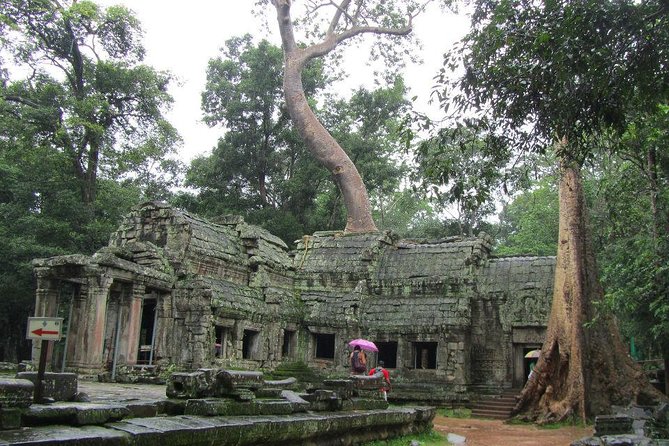
- Ta Prohm, known for its trees intertwined with the ruins.
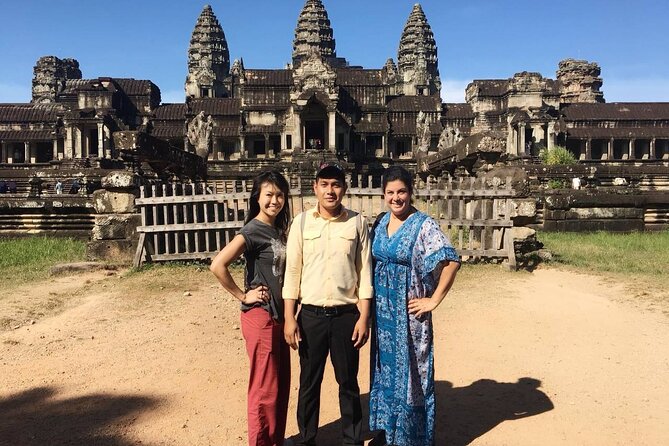
- Angkor Wat, the largest religious monument, originally Hindu and later Buddhist.
The day concludes with a visit to Phnom Bakheng, a temple mountain dedicated to Shiva, popular for its sunset views.
Angkor Archaeological Park
A sprawling ancient site, Angkor Archaeological Park encompasses the vestiges of the Khmer Empire‘s capital, once among the largest preindustrial cities in the world.
Visitors begin their journey by purchasing passes, which grant access to the park’s iconic temples. The duration of the pass determines the depth of exploration, with options for 1-day, 3-day, and 7-day visits.
From the serene stone faces of Bayon Temple to the intricate carvings of Baphuon, the park offers a captivating glimpse into Cambodia’s rich cultural heritage.
Exploring this UNESCO World Heritage site is a must for any traveler seeking to enjoy the grandeur of Khmer civilization.
Bayon Temple and Baphuon
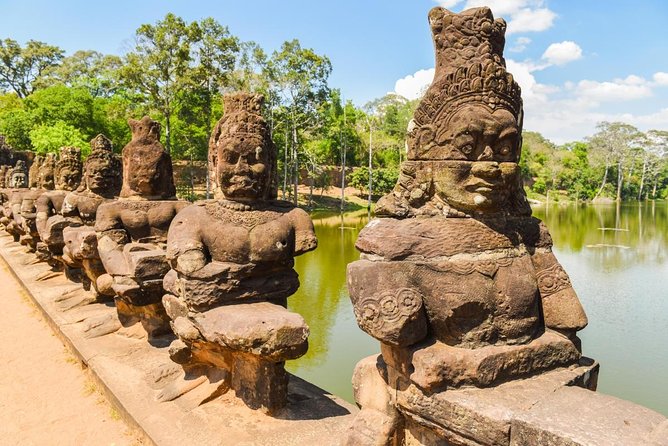
Nestled within the Angkor Archaeological Park, the Bayon Temple stands as a mesmerizing centerpiece, its serene stone faces gazing out over the surrounding landscape.
This 12th-century Khmer temple, built during the reign of Jayavarman VII, is renowned for its intricate carvings and enigmatic smiles.
The nearby Baphuon temple, a three-tiered structure dedicated to Shiva, offers a glimpse into the architectural prowess of the Khmer empire.
Key features include:
- Massive central tower
- Detailed bas-relief carvings
- Impressive stone construction
- Ongoing restoration efforts
Together, Bayon and Baphuon showcase the cultural and spiritual significance of Angkor, inviting visitors to enjoy the rich tapestry of Cambodia’s past.
Ta Prohm Temple and Terrace of the Elephants
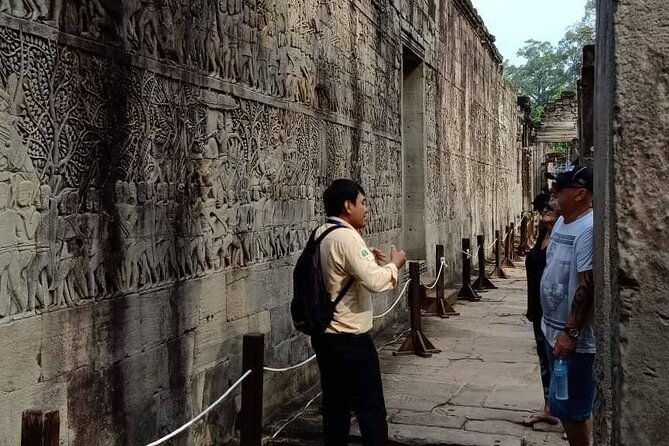
Exploring the captivating ruins of Ta Prohm, visitors are enchanted by the sight of towering trees intertwined with the crumbling structures.
This 12th-century temple, founded by Jayavarman VII, has become a symbol of the power of nature to reclaim the built environment.
Nearby, the Terrace of the Elephants offers an impressive display of sculpted pachyderms, restored in the 1990s and 2000s.
Originally part of the royal palace complex, the terrace allowed the king to view his army and ceremonial processions.
These two sites provide a glimpse into the grandeur of the Khmer Empire and the enduring legacy of Angkor’s architectural marvels.


Angkor Wat and Phnom Bakheng
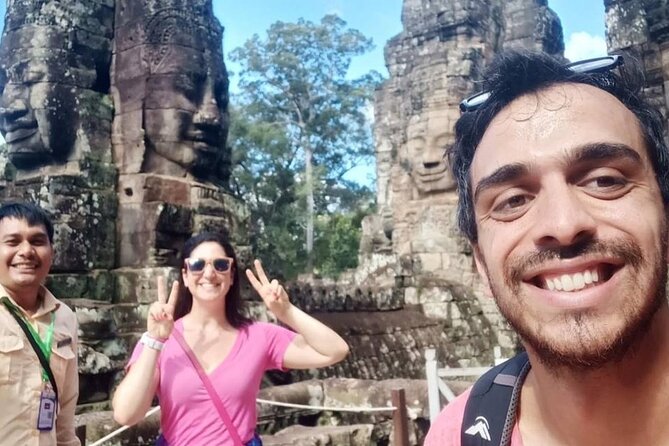
Angkor Wat stands as the crowning jewel of the Angkor Archaeological Park, a sprawling complex that bears witness to the might and cultural brilliance of the Khmer Empire.
As the largest religious monument in the world, Angkor Wat captivates visitors with its intricate carvings, towering spires, and serene stone faces. Nearby, Phnom Bakheng offers a popular vantage point for sunset views over the ancient landscape.
Key highlights of the Angkor Wat experience include:
- Exploring the temple’s five iconic towers, each symbolizing the five peaks of Mount Meru.
- Admiring the bas-reliefs that depict scenes from Hindu mythology and the daily life of the Khmer people.
- Witnessing the temple’s transformation from a Hindu to a Buddhist place of worship.
- Climbing to the top of Phnom Bakheng for a breathtaking panorama of Angkor Wat at dusk.
Day 2 Itinerary
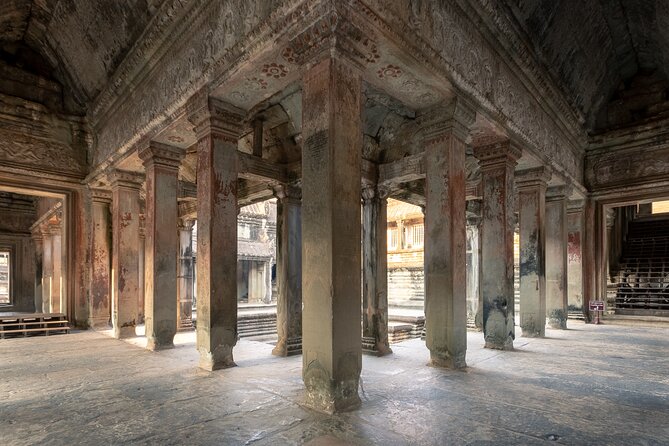
The second day’s adventure begins as visitors arise at the crack of dawn to revisit the awe-inspiring Angkor Wat.
After exploring the temple complex during the serene sunrise, they head to Banteay Srei, a 10th-century temple renowned for its intricate red sandstone carvings.
The tour then continues to Banteay Samre, a Hindu temple in the Angkor Wat style, followed by the state temple of Pre Rup.
The final stop is the stilted village of Kompong Phluk, where the community relies on fishing and farming on the Tonle Sap.
With a full day of immersing in Cambodian culture and history, the tour provides a well-rounded experience of the Angkor region.
Banteay Srei and Kompong Phluk
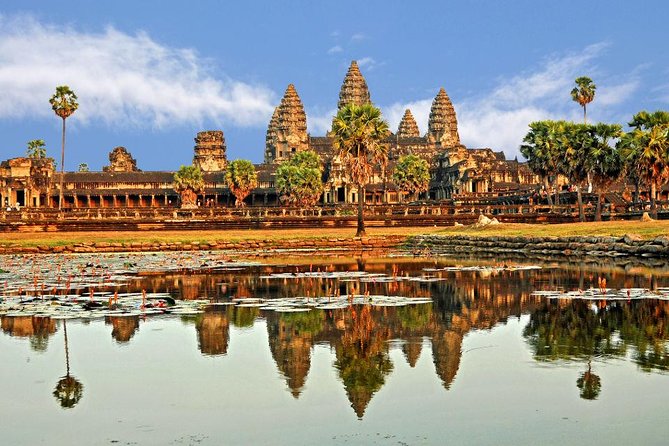
After exploring the grandeur of Angkor Wat during the serene sunrise, the tour moves on to Banteay Srei, a 10th-century temple renowned for its intricate red sandstone carvings.
Known as the "Citadel of the Women," this temple showcases Khmer artistry at its finest.
The tour then visits a local village, where visitors can:
- Observe the traditional process of palm sugar production.
- Explore the Landmine Museum, which educates on the ongoing impact of landmines in Cambodia.
- Interact with the villagers and learn about their daily life and culture.
- Witness the stilted houses and unique fishing practices of the Tonle Sap Lake community at Kompong Phluk.
Frequently Asked Questions
Can I Bring My Own Food and Drinks?
Yes, you can bring your own food and drinks on this tour. The package includes meals and soft drinks, but you’re welcome to bring additional snacks or beverages if desired. This provides more flexibility during the long day.
What Languages Does the Tour Guide Speak?
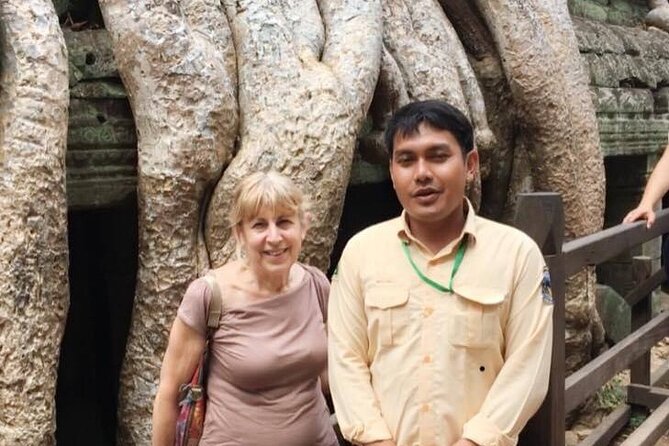
The tour guide on this 2-Day Angkor & Village Tour speaks English. They’re an English-speaking guide who provides commentary and information throughout the private tour of the Angkor Archaeological Park and local Cambodian village.
Is There a Dress Code for the Temples?
The tour has no formal dress code, but visitors are expected to dress modestly when visiting the temples. Shorts, short skirts, and sleeveless tops are generally acceptable, but guests should avoid overly revealing clothing out of respect for the sacred sites.
Can I Extend the Tour for an Additional Day?
Yes, the tour can be extended for an additional day. Travelers can speak with the tour operator to customize the itinerary and include more temples or activities beyond the standard 2-day tour.
How Many People Are Typically in a Tour Group?
The tour group size typically ranges from 2 to 4 people. The private tour allows for a more personalized experience, with a flexible itinerary tailored to the group’s interests and pace.
2-Day Angkor & Village Tour
“This tour was very good and the guide was very knowledgeable. However the walking and climbing around the ruins were challenging as one has to be v…”
Recap
The 2-Day Angkor & Village Tour offers an immersive experience, showcasing Cambodia’s rich history and culture. Visitors will explore the renowned Angkor Wat, Bayon, and Ta Prohm, marveling at the intricate temple architecture and natural beauty of the Angkor Archaeological Park. The second day includes a cultural encounter in Kompong Phluk, providing an unforgettable journey through Cambodia’s heritage.


