
Aikido is a Japanese martial art that’s designed for self-defense. It emphasizes principles like posture, balance, and redirecting an opponent’s energy. Practitioners learn to use circular movements and joint locks to neutralize attacks without causing harm. Aikido’s unique approach aims to resolve conflicts peacefully through effective yet compassionate self-protection. Beginners can develop practical skills applicable in real-world situations. But there’s more to this art than meets the eye. To understand Aikido’s deeper principles and how it can transform one’s mindset, it’s worth exploring further.
Key Points
- Aikido is a Japanese martial art that emphasizes principles of posture, balance, and stability, with a focus on self-defense and everyday application.
- The art utilizes circular movements, redirections, and joint locks to neutralize attacks, aiming to resolve conflicts peacefully without causing harm.
- Key principles of Aikido include harmonious energy, circular movements, non-resistance, centered posture, and blending techniques to use an opponent’s momentum against them.
- Aikido techniques, such as irimi-nage and shihonage, translate to practical self-defense skills applicable in real-world situations, prioritizing control and subdual over harm.
- Aikido was founded in the early 20th century by Morihei Ueshiba, who synthesized various Japanese martial arts and emphasized spiritual beliefs of self-improvement and conflict resolution.

👉 Check out our guide to the 5 Best Cruises And Boat Tours In Kyoto
Contents
- Key Points
- What Is Aikido?
- Key Principles of Aikido
- Techniques and Applications
- Aikido for Self-Defense
- Aikido’s Historical Background
- Benefits of Practicing Aikido
- Who Can Practice Aikido?
- Getting Started With Aikido
- Frequently Asked Questions
- What Kind of Training Equipment Is Needed for an Aikido Workshop?
- Is the Workshop Suitable for People With Physical Disabilities?
- What Should Participants Wear to the Aikido Workshop?
- Can the Workshop Be Modified for Children or Teenagers?
- Is There an Option for Private or One-On-One Aikido Lessons?
- Recap
- Our Top Picks in Kyoto
- More Tour Reviews in Kyoto
- Not for you? Here's more things to do in Kyoto we have recnetly reviewed
What Is Aikido?
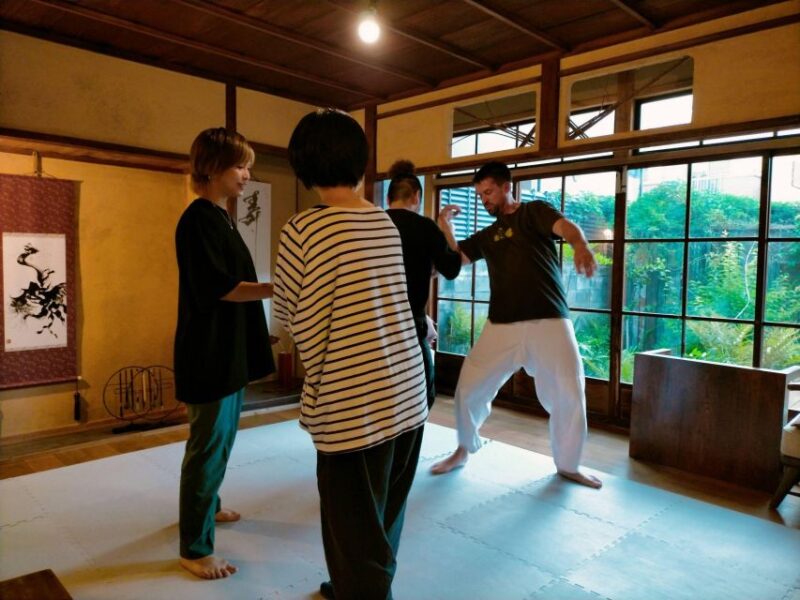
Aikido is a Japanese martial art that typically emphasizes the principles of posture, balance, and stability.
It’s a defensive martial art focused on self-defense and everyday life application.
Unlike many other martial arts, Aikido doesn’t rely on strikes or kicks. Instead, it utilizes circular movements, redirections, and joint locks to neutralize attacks.
Aikido practitioners learn to blend with an aggressor’s energy and use it against them. This is achieved through precise body positioning, timing, and leverage.
The ultimate goal in Aikido is to resolve conflicts peacefully without causing harm.
You can also read our reviews of more tours and experiences in Kyoto.


Key Principles of Aikido
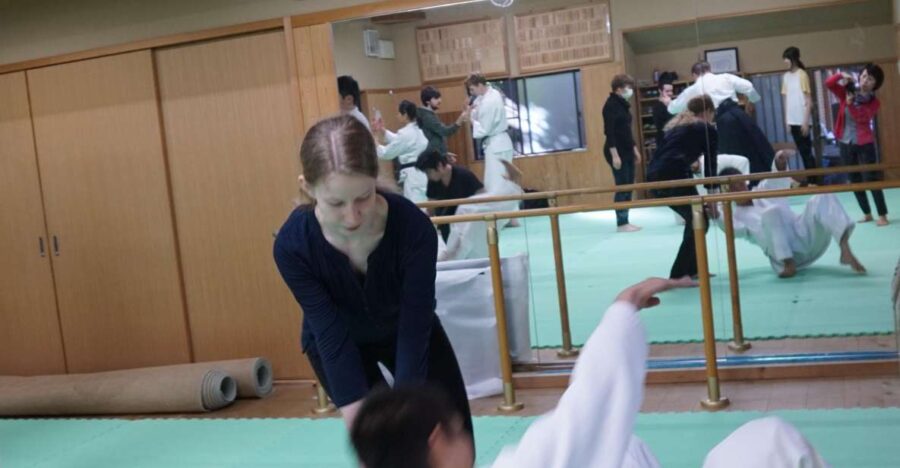
Three key principles underpin the practice of Aikido – harmonious energy, circular movements, and non-resistance. Practitioners learn to blend with an attacker’s force, redirect it using fluid circular motions, and neutralize the threat without causing harm.
| Principle | Description |
|---|---|
| Harmonious Energy | Aligning one’s energy with the aggressor to neutralize conflict |
| Circular Movements | Redirecting force through fluid, elliptical movements |
| Non-Resistance | Avoiding direct confrontation and yielding to an attacker’s momentum |
| Centered Posture | Maintaining balance and stability through proper body alignment |
| Blending Techniques | Using the opponent’s own energy and momentum against them |
This philosophical approach sets Aikido apart from more aggressive martial arts, emphasizing self-defense over offense.
Techniques and Applications
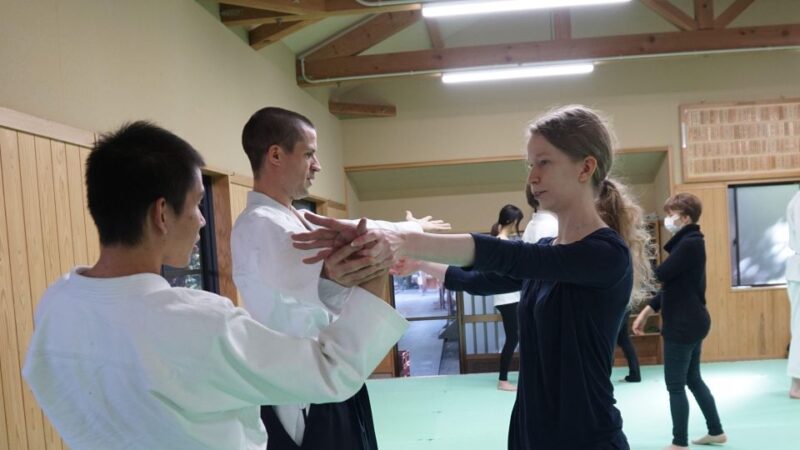
With its focus on harmonious energy, circular movements, and non-resistance, Aikido practitioners learn a range of techniques to neutralize threats without causing harm.
These include pins, throws, and evasive maneuvers that redirect an opponent’s force rather than meeting it head-on. Aikido emphasizes blending with an attacker’s movements and using their own momentum against them.
Practitioners may learn to execute techniques like the ‘irimi-nage,’ a powerful throwing technique, or the ‘shihonage,’ which uses a circular motion to control the opponent’s arm.
These skills translate not just to self-defense, but to everyday life, helping practitioners maintain balance, stay centered, and respond calmly to challenging situations.
Aikido for Self-Defense
Through its emphasis on circular movements and non-resistance, Aikido equips practitioners with effective self-defense techniques that neutralize threats without causing harm. By redirecting an aggressor’s force and using their momentum against them, Aikido practitioners can neutralize attacks and immobilize opponents safely.
Some key aspects of Aikido’s self-defense applications include:
- Techniques that avoid direct confrontation and minimize risk of injury to both parties
- Principles of blending with an attacker’s energy to control and subdue them
- Practical self-defense skills that can be applied in real-world situations
Ultimately, Aikido’s self-defense focus aims to resolve conflicts peacefully and harmoniously, making it a unique and valuable martial art for those seeking effective yet compassionate self-protection.
More Great Tours NearbyAikido’s Historical Background
Aikido’s roots can be traced back to the early 20th century, when its founder, Morihei Ueshiba, began synthesizing various Japanese martial arts into a unique system focused on self-defense and spiritual development.
Ueshiba’s training in arts like jujitsu, judo, and sword fighting informed Aikido’s techniques, but he sought to create a practice centered on harmony and non-aggression.
Drawing on his spiritual beliefs, Ueshiba developed Aikido’s characteristic flowing movements and redirection of an opponent’s force, rather than meeting it head-on.
Today, Aikido remains a popular Japanese martial art, with practitioners around the world exploring its principles of self-improvement and conflict resolution through dynamic, non-violent techniques.


Benefits of Practicing Aikido
Practicing Aikido can enhance one’s physical and mental well-being.
It develops core strength, flexibility, and balance while also promoting mindfulness and stress reduction.
The art’s emphasis on circular movements and redirection of an opponent’s force helps practitioners cultivate a deeper understanding of their own body mechanics and improve their overall coordination.
Plus, Aikido’s focus on breathing techniques and meditation-like practices can foster a greater sense of inner calm and focus, which can translate to improved decision-making and problem-solving skills in everyday life.
On top of that, the non-competitive nature of Aikido encourages practitioners to approach conflict resolution with empathy and compassion, making it a valuable practice for personal growth and self-improvement.
Who Can Practice Aikido?
Aikido is an accessible martial art that welcomes practitioners of all ages and fitness levels, from complete beginners to seasoned martial artists.
One of the unique aspects of Aikido is its focus on using the attacker’s own energy and momentum against them, rather than relying on physical strength or size. This makes Aikido an ideal choice for people of all builds and abilities.
Whether you’re young or old, athletic or sedentary, Aikido can be tailored to your individual needs and capabilities. The emphasis on technique and principles, rather than brute force, means that Aikido can be practiced and enjoyed by anyone interested in exploring this fascinating Japanese martial art.
Getting Started With Aikido
For those interested in exploring the dynamic art of Aikido, the first step is to find an accredited dojo or training center that offers beginner-friendly classes. Experienced instructors will guide newcomers through the fundamental techniques and principles that form the foundation of this Japanese martial art.
Aikido classes typically start with warm-up exercises to prepare the body and mind, followed by the practice of basic movements and throws. Beginners will learn how to maintain proper posture, balance, and footwork, which are essential for executing Aikido techniques effectively.
As students progress, they’ll be introduced to more advanced forms and applications, such as joint locks, immobilizations, and defenses against attacks. The emphasis is on using the opponent’s energy and momentum against them, rather than relying on brute force.
Consistent practice and a commitment to learning are key to developing proficiency in Aikido. With patience and dedication, students can unlock the art’s deeper principles of harmony, non-resistance, and self-defense.
Frequently Asked Questions
What Kind of Training Equipment Is Needed for an Aikido Workshop?
The workshop requires minimal equipment. Participants only need comfortable workout clothes and indoor trainers. Aikido focuses on technique and body positioning, so no specialized gear is needed beyond the basics for a safe and effective training session.
Is the Workshop Suitable for People With Physical Disabilities?
The aikido workshop is suitable for people with physical disabilities, as the instructor can provide modifications and accommodations to ensure their safe and meaningful participation. However, those with severe mobility issues may find the workshop challenging.
What Should Participants Wear to the Aikido Workshop?
Participants should wear loose, comfortable clothing that allows for easy movement, such as t-shirts, sweatpants, or athletic wear. Avoid jeans or restrictive clothing. Socks or soft indoor shoes are recommended, but participants won’t need to wear a martial arts uniform.
Can the Workshop Be Modified for Children or Teenagers?
The workshop can be modified for children or teenagers. The instructor is experienced in teaching Aikido to all age groups and can adjust the pace and techniques to suit the participants’ needs and abilities.
Is There an Option for Private or One-On-One Aikido Lessons?
The Aikido workshop offers group classes only, but the instructor may consider private one-on-one lessons for those seeking more personalized instruction. Interested participants should inquire about private lesson availability and pricing when booking the group workshop.
What Is Aikido? (An Introduction to the Japanese Martial Art
Recap
Aikido is a unique Japanese martial art that emphasizes peaceful conflict resolution through effective self-defense techniques.
Its principles of harmony, balance, and non-resistance allow practitioners to neutralize attacks without causing harm.
Aikido’s practical applications make it a valuable skill for real-world self-protection, while the art’s philosophical approach promotes personal growth and conflict resolution.
With its inclusive nature, Aikido is accessible to individuals of all ages and backgrounds.
You can check availability for your dates here:


