
If you’re curious about how social change has shaped Adelaide, this Social Justice Tour offers a focused journey through the city’s landmarks and stories. It’s designed for those who want more than just sightseeing – it’s about understanding the historical struggles and victories that have defined South Australia’s approach to fairness and equality. With a knowledgeable guide leading the way, you’ll explore sites linked to civil rights, gender equality, Indigenous recognition, and social reforms.
What we really like about this tour are two things: its expert narration that makes complex social issues accessible, and its compact 2-hour format, which fits well into most travel plans without feeling rushed. On the flip side, the tour does involve a fair amount of walking, so comfortable shoes are a must. Also, since the visit is limited to a small group of 20, it’s intimate and allows for meaningful conversations, but those who prefer larger groups might find it a bit snug.
This tour suits travelers who enjoy history, social justice, or simply want an authentic, local perspective on Adelaide’s development. It’s especially good for those who appreciate guided walks that combine storytelling with site visits. If you’re after a meaningful educational experience in a manageable time frame, this could be just right.
Key Points

- Focus on Social Justice: The itinerary emphasizes Adelaide’s pioneering moves in social reforms, from voting rights to Indigenous recognition.
- Expert Guide: Knowledgeable guides, like Graeme, bring depth and clarity, making complex topics easy to grasp.
- Compact and Convenient: The 2-hour small-group walk allows a thorough exploration without overwhelming your schedule.
- Rich Site Selection: The stops include parliament, historic institutions, museums, and landmarks that reveal the city’s social evolution.
- Cost-Effective: At around $37 AUD, the tour offers good value considering the depth of storytelling and site access.
- Educational and Inspiring: You’ll leave with a clearer understanding of how Adelaide’s past continues to influence its present.

👉 Check out our guide to the 2 Best Dining Experiences In Adelaide
Social Justice Tour of Adelaide
“I have been on many guided tours led by Graeme. Without exception, his research, knowledge and professionalism are outstanding. Graeme has both bro…”
You can also read our reviews of more tours and experiences in Adelaide.


Contents
- Key Points
- In-Depth Review of the Social Justice Tour of Adelaide
- Introduction to the Tour Experience
- Itinerary Breakdown
- What Travelers Can Expect
- The Value of This Experience
- Reviews and Authentic Perspectives
- Our Top Picks in Adelaide
- More Tours in Adelaide
- More Tour Reviews in Adelaide
- Not for you? Here's more things to do in Adelaide we have recnetly reviewed
In-Depth Review of the Social Justice Tour of Adelaide
Introduction to the Tour Experience
This Social Justice Tour in Adelaide is crafted for those interested in understanding how social issues have played a role in shaping the city’s identity. It’s a guided walk that’s easy-paced, lasting roughly two hours, and takes place entirely on foot around key sites in the city center.
What makes this tour stand out is its deep dive into themes like gender equality, Indigenous rights, political reform, and environmental initiatives—which are often overlooked in basic city tours. You’ll visit historic and government buildings, museums, and monuments, each with a story that adds a layer to Adelaide’s reputation as a progressive city.
Two particular features we appreciate are the small group size, enhancing discussion and engagement, and the expert narration of the guide, who weaves together history, legislation, and personal stories seamlessly. You’ll find the tour accessible, with most travelers able to participate, and it’s especially suited for those who love learning about civic progress and social movements.
One potential consideration is the walking aspect—though the tour is not physically demanding, it involves moving between multiple sites. If mobility is a concern, it’s worth noting that the tour is designed for comfort with plenty of stops.
Itinerary Breakdown
Stop 1: Parliament House Of South Australia
Our journey begins at Parliament House, where the guide introduces Wakefield’s systematic colonization scheme. From here, we learn what social justice really means in Adelaide’s context, including the historic parliamentary reforms and the introduction of the Secret Ballot, a pivotal step toward fair voting.
This initial stop sets the stage for understanding how political reforms laid the groundwork for broader social change. The site itself feels imposing and historic, giving a sense of government’s role in social justice. The guide’s explanations make the political history accessible without sounding dry.
Stop 2: Government House
Next, we head to Government House, notable as the oldest continuously used government residence in Australia. The guide discusses the historic significance of this site, especially highlighting the appointment of Australia’s first Indigenous Governor and the first female Governor, showcasing South Australia’s trailblazing approach.
This site emphasizes progress in representation, and standing there, you get a real sense of how leadership has evolved. It’s a powerful reminder that social change often begins with leadership at the top.
Stop 3: Dame Roma Mitchell
The tour then moves to Dame Roma Mitchell’s memorial. Her many “firsts”—including being Australia’s first female QC, high court judge, and vice-chancellor—are inspiring milestones. Her story embodies the fight for gender equality within the judicial system, and her legacy continues to influence Australian society.
The guide shares anecdotes about her life, making her achievements feel tangible. It’s a testament to how individual leaders can push societal boundaries and open doors for others.
Stop 4: Mary Lee
Further along, we visit the site associated with Mary Lee, a key figure in women’s suffrage in South Australia. The guide explains her vital role in securing voting rights for women, alongside Muriel Matters and others. Their efforts laid the foundation for gender equality in politics and society.
This segment is especially engaging for those interested in women’s rights movements. The stories of Mary Lee and Muriel Matters highlight the importance of activism and perseverance.
Stop 5: Centre of Democracy
The Centre of Democracy offers a glimpse into Don Dunstan’s reforms, a progressive Premier known for pushing social boundaries. Inside, exhibits showcase LGBTQ rights, Aboriginal land rights, and education reforms.
Standing here, you understand how leadership can drive social justice initiatives. The guide emphasizes Dunstan’s pivotal role in transforming South Australia into a more inclusive society.
Stop 6: State Library of South Australia
The next stop is the State Library, where the focus is on Catherine Helen Spence, Australia’s first female journalist and politician. Her tireless work for women’s suffrage and her pioneering role in politics make her a figure worth knowing.
A quick visit into the library reveals her contributions and leaves you inspired by her resilience and vision for equality.
Stop 7: Migration Museum
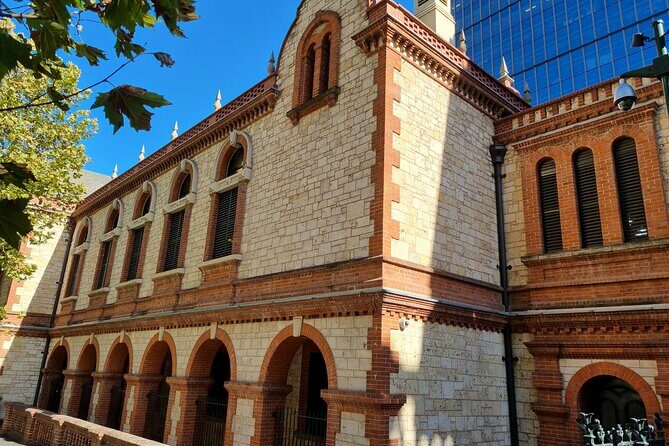
The Migration Museum is situated on the former site of the Destitute Asylum. Here, the focus is on social reforms related to homelessness, destitution, and unmarried mothers. The guide discusses how policies changed over the 19th and 20th centuries to support vulnerable populations.
This stop highlights social safety nets and the ongoing challenge of ensuring dignity for all citizens, which remains relevant today.
Stop 8: South Australian Police Historical Society Museum
Entering the Old Mounted Police Barracks, you learn about South Australia’s police force, one of the world’s oldest. The stories about its formation and evolution reveal how law enforcement and social justice often intersect.
This is a good moment to reflect on the balance between security and rights, especially in historical contexts.
Stop 9: The University of Adelaide
Founded in 1874, the university was among the first in Australia to admit women to degree programs, a milestone in gender equality. The guide discusses how education has been a tool for social mobility and reform, making this site a symbol of progress.
Stop 10: Scots Church Adelaide
This stop underscores religious freedom as a founding principle of South Australia, highlighting the early separation of Church and State. The site reminds us how religious tolerance helped foster social inclusion.
Stop 11: The Austral
The tour concludes at The Austral, where recent policies like recycling, renewable energy, and the Voice to Parliament are discussed. This final stop ties the historical themes to current social and environmental debates, emphasizing ongoing reform.
What Travelers Can Expect
Throughout the tour, you’ll enjoy a thoughtful commentary that connects historic moments to contemporary issues. Expect a walking pace that’s relaxed but steady, with multiple stops allowing for questions and photos. The tour’s cost includes the guiding service, but not transportation to and from the meeting point, or food and drinks.
The tour is designed for small groups, which means your guide can tailor insights and foster engaging discussions. It’s perfect if you’re eager to see Adelaide through the lens of social progress and want a story-driven experience, rather than just a sightseeing stroll.


The Value of This Experience
At around $37 AUD per person, this tour offers remarkable value considering the depth of storytelling and the quality of sites visited. It’s educational without feeling heavy and offers an authentic glimpse into Adelaide’s civic identity. Plus, the tour’s focus on local stories makes it more meaningful than generic city walks.
Reviews and Authentic Perspectives
Reviewers are unanimous in praising the knowledgeable guides. One reviewer, Helen, described Graeme as having “broad and deep knowledge” and appreciated the way he linked key issues. She also noted that the tour is a great way to learn about both history and contemporary social issues.
The small size of the group and the engaging storytelling make it feel more like a conversation than a lecture, which many travelers find refreshing. The fact that all sites are free to enter after the tour also enhances the overall value.
This Social Justice Tour of Adelaide is an excellent choice for travelers who want to explore more than just the surface of the city. It’s ideal for those interested in history, social reform, and civic rights, offering a manageable yet deeply insightful experience. The combination of expert guides, meaningful site visits, and a clear focus on social issues makes it both educational and inspiring.
If you’re in Adelaide for a few days and crave an authentic, story-rich experience that respects your time and curiosity, this tour is worth considering. It’s a rare opportunity to connect the dots between past struggles and present-day efforts for a fairer society, all within the comfort of a small group.
How long is the tour?
It lasts approximately 2 hours, covering multiple sites on foot around Adelaide’s city center.
What is the cost of the tour?
The tour is priced at about $36.93 AUD per person, which includes the guiding service but excludes transportation to the meeting point and food.
Is the tour suitable for all ages?
Most travelers can participate, and it’s a relaxed pace, but it involves walking between sites. It’s best suited for those with a moderate level of mobility and a genuine interest in social history.
Where does the tour start and end?
It begins at Parliament House of South Australia on North Terrace and ends opposite the Austral Hotel on Rundle Street in Adelaide’s CBD.
Are tickets refundable?
Yes, the tour offers free cancellation if you notify at least 24 hours in advance.
What makes this tour unique?
It combines historical landmarks with stories of social reform and progress, all led by guides with deep knowledge and passion for Adelaide’s social history.
This walking tour offers a compelling, authentic perspective on Adelaide’s ongoing story of fairness and equality. For anyone interested in learning how social justice has shaped a city, it’s a memorable way to connect with local history and current debates.


