
Uncover the captivating history of the Habsburgs at the Capuchins Crypt in Vienna. This remarkable site, which has stood for over four centuries, serves as the final resting place for 12 emperors, 19 empresses, and countless other royals. With a ticket in hand, visitors can explore the crypt’s lavish sarcophagi and funerary monuments, marveling at the grandeur and imperial power that defined this cultural treasure. Explore Austria’s rich past and discover why the Capuchins Crypt remains a must-see destination for those seeking to enjoy the legacy of the Habsburg dynasty.
Key Points
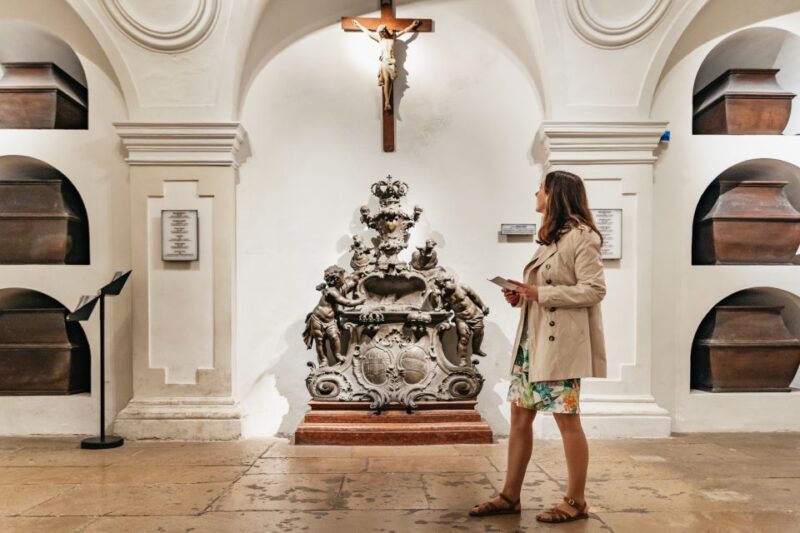
- The Capuchins Crypt in Vienna is the burial vault of the Habsburg family, housing the remains of 12 emperors and 19 empresses.
- An entrance ticket allows visitors to explore this remarkable 400-year-old monument and pay respects to the influential members of the Habsburg dynasty.
- The crypt features 10 vaults with sarcophagi, urns, and funerary monuments that showcase the imperial power and grandeur of the Habsburgs.
- Visiting the Capuchins Crypt provides an opportunity to gain insights into Austria’s rich history and the enduring legacy of the Habsburg dynasty.
- The crypt is a testament to the wealth, influence, and cultural heritage of the Habsburgs, making it a must-see for visitors to Vienna.

👉 Check out our guide to the 3 Best Craft Beer Tours And Tastings In Vienna
Contents
- Key Points
- Overview of the Capuchins Crypt
- Historical Significance of the Crypt
- Key Architectural Features of the Crypt
- Prominent Burials Within the Crypt
- Practical Information for Visiting the Crypt
- Importance of the Habsburg Dynasty
- Capuchins Crypt Entrance Ticket Details
- Why Visit the Capuchins Crypt
- Frequently Asked Questions
- Can I Take Photos Inside the Crypt?
- How Long Does a Typical Visit Last?
- Is the Crypt Wheelchair Accessible?
- Can I Bring Food and Drinks Inside?
- Are Audio Guides Available for the Tour?
- Recap
- Our Top Picks in Vienna
- More Tickets in Vienna
- More Tour Reviews in Vienna
- Not for you? Here's more things to do in Vienna we have recnetly reviewed
Overview of the Capuchins Crypt
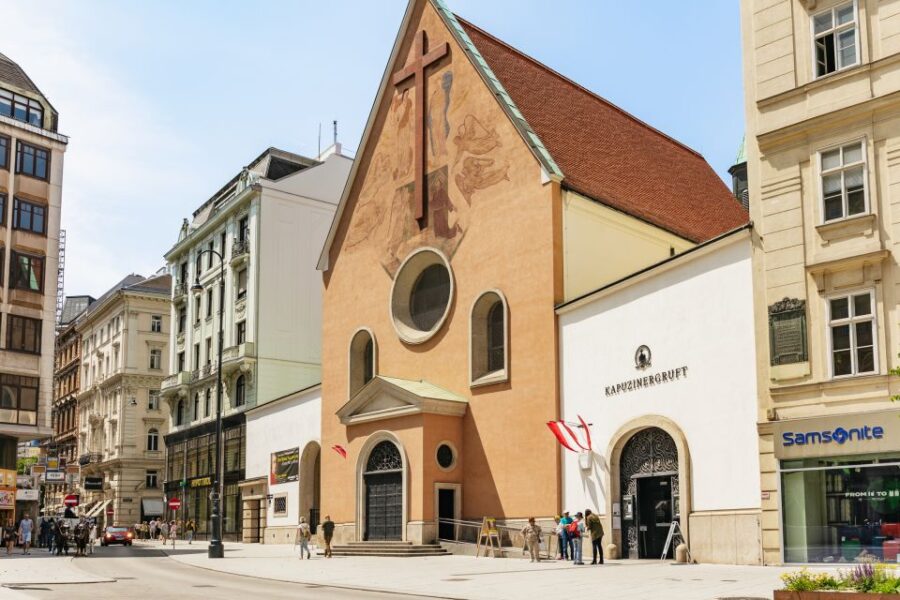
The Capuchins Crypt is the burial vault of the Habsburg family, serving as their resting place since 1618. This monument was built as a symbol of sovereign power, housing the remains of 12 emperors, 19 empresses, and their family members.
The crypt represents 400 years of Austrian and European history, containing the burial places of prominent figures like Emperor Franz Joseph and Empress Elisabeth.
Consisting of 10 vaults with sarcophagi, urns, and funerary monuments, the Capuchins Crypt evokes the imperial power and grandeur of the Habsburg dynasty.
With over 150 Habsburg personalities laid to rest here, including Maria Theresa and Rudolph, the crypt offers visitors a glimpse into the rich history of Austria’s ruling family.
Here are more great tours and experiences we've reviewed in Vienna


Historical Significance of the Crypt
As a monument that has endured for over 400 years, the Capuchins Crypt represents a rich tapestry of Austrian and European history, serving as the final resting place for numerous prominent figures who have shaped the continent’s political and cultural landscape. Among the notable burials are Emperor Franz Joseph, Empress Elisabeth (Sisi), and their son Rudolph, whose lives and legacies continue to captivate audiences worldwide. The crypt’s historical significance is further underscored by the presence of 12 emperors, 19 empresses, and countless other members of the illustrious Habsburg dynasty, whose influence extended far beyond the borders of Austria.
| Emperor | Empress | Other Royals |
|---|---|---|
| Franz Joseph | Elisabeth (Sisi) | Rudolph |
| Maria Theresa | Maria Anna | Otto von Habsburg |
| Ferdinand I | Sophia | countless others |
Key Architectural Features of the Crypt
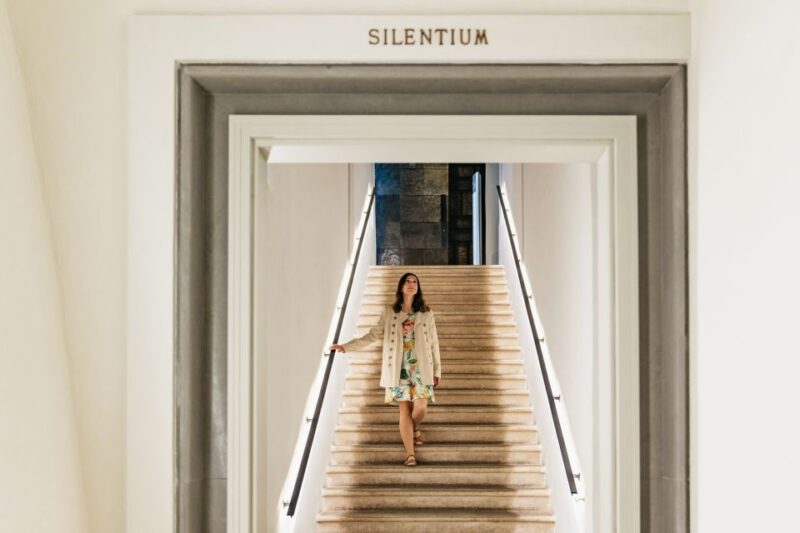
Consisting of 10 vaults, the Capuchins Crypt features an array of sarcophagi, urns, and funerary monuments that collectively evoke the imperial power and grandeur of the Habsburg dynasty.
The design of the crypt is a testament to the wealth and influence of the Habsburgs, who ruled over the Austro-Hungarian Empire for centuries.
Each vault contains the remains of emperors, empresses, and other prominent members of the royal family, with their ornate tombs and memorials serving as a visual representation of the dynasty’s legacy.
Visitors can’t help but be awestruck by the sheer scale and opulence of the Capuchins Crypt, which stands as a remarkable monument to Austria’s rich history and cultural heritage.
Prominent Burials Within the Crypt
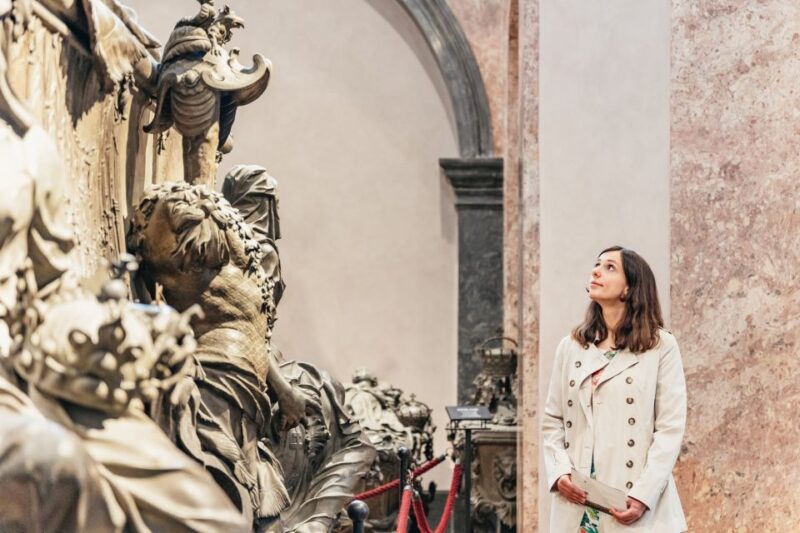
Prominently interred within the Capuchins Crypt are over 150 Habsburg personalities, including the revered Empress Maria Theresa, the ill-fated Emperor Franz Joseph and Empress Elisabeth (also known as ‘Sisi’), as well as their son Archduke Rudolph.
These prominent figures represent 400 years of Austrian and European history, with their lavish sarcophagi and funerary monuments evoking the imperial power and grandeur of the Habsburg dynasty.
Visitors can pay their respects to these illustrious members of one of Europe’s most influential royal families, whose lives and legacies are intricately woven into the history and cultural fabric of Vienna and beyond.
More Great Tours NearbyPractical Information for Visiting the Crypt
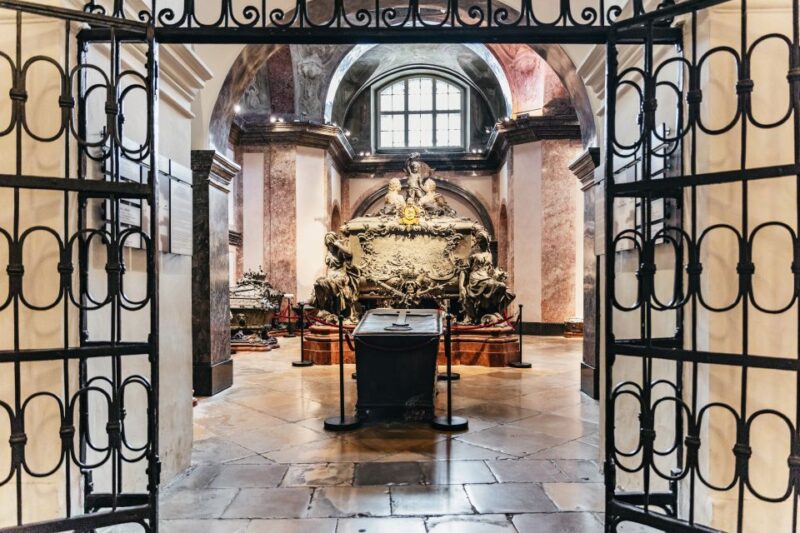
For those interested in visiting the Capuchins Crypt, the entrance ticket starts at $9.21 per person and can be easily booked online.
Given the crypt’s popularity, it’s wise to reserve a spot in advance as tickets are likely to sell out. Visitors also have the option to cancel their reservation up to 24 hours prior to their scheduled visit.
When planning your trip, keep in mind a few key practical considerations:
- Book your tickets in advance to secure your spot.
- Allow for sufficient time to explore the crypt and its historical significance.
- Be prepared for the possibility of crowds, as the Capuchins Crypt is a popular attraction in Vienna.


Importance of the Habsburg Dynasty
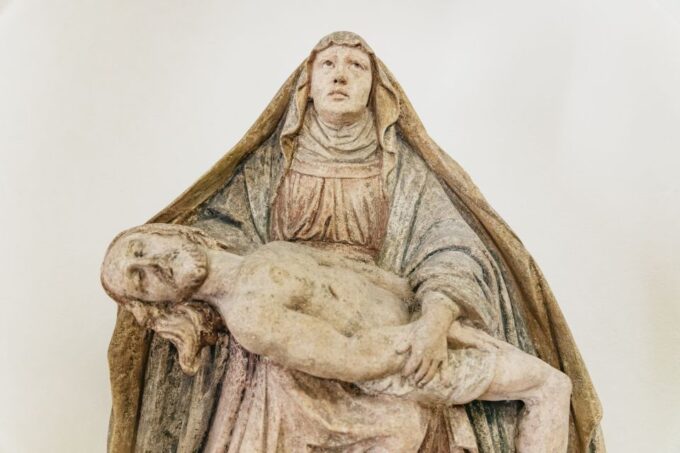
The enduring legacy of the Habsburg dynasty lies in its profound influence on the course of Austrian and European history over four centuries.
As the ruling house of the Holy Roman Empire and the Austrian Empire, the Habsburgs left an indelible mark on the political, cultural, and religious landscape of the continent.
Their dynastic ambitions and far-reaching power shaped the geopolitical landscape, from the wars of succession to the unification of diverse territories under their rule.
The Capuchins Crypt, where 12 emperors, 19 empresses, and countless other Habsburg luminaries are laid to rest, stands as a tangible symbol of this legacy – a testament to the dynasty’s enduring importance in shaping the destiny of Europe.
Capuchins Crypt Entrance Ticket Details
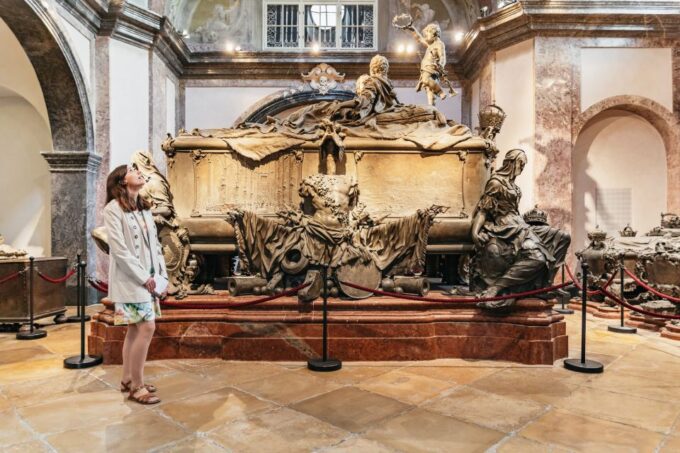
Visitors can purchase tickets to enter the Capuchins Crypt, the resting place of the Habsburg dynasty since 1618. The entrance ticket starts at $9.21 per person and provides access to explore this monument of sovereign power, where 12 emperors, 19 empresses, and their family members are laid to rest.
The crypt features several notable aspects:
- It consists of 10 vaults with sarcophagi, urns, and funerary monuments.
- Over 150 Habsburg personalities, including Maria Theresa, Franz Joseph, Elisabeth (Sisi), and their son Rudolph, are buried here.
- The crypt evokes the imperial power and grandeur of the Habsburg dynasty, representing 400 years of Austrian and European history.
Visitors are advised to book their tickets in advance, as the crypt is likely to sell out.
Why Visit the Capuchins Crypt
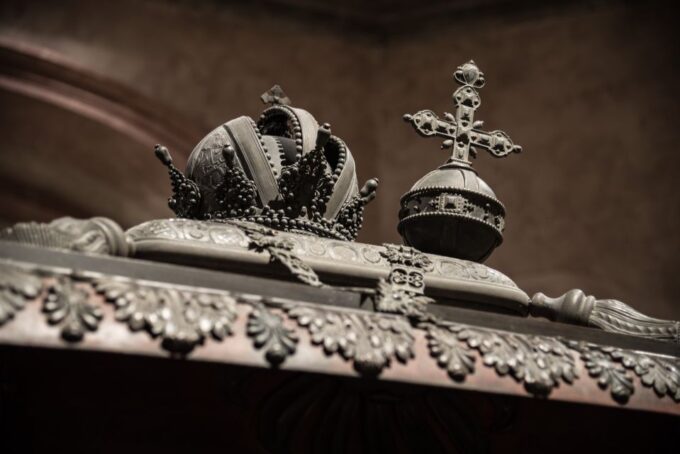
Although the Capuchins Crypt is the burial vault of the Habsburg dynasty, it offers visitors a unique glimpse into 400 years of Austrian and European history.
As the resting place of 12 emperors, 19 empresses, and their family members, the crypt represents the imperial power and grandeur of the once-mighty Habsburg Empire.
Exploring the sarcophagi, urns, and funerary monuments within the 10 vaults allows visitors to connect with the lives and legacies of prominent historical figures like Emperor Franz Joseph and Empress Elisabeth.
Beyond its historical significance, the Capuchins Crypt also stands as a symbol of sovereign power, making it a must-see destination for those interested in Austria’s rich cultural heritage.
Frequently Asked Questions
Can I Take Photos Inside the Crypt?
Yes, visitors can take photos inside the Capuchins Crypt. Photography is generally allowed, but flash photography may be prohibited to preserve the artifacts and atmosphere of the historic burial site.
How Long Does a Typical Visit Last?
A typical visit to the Capuchins Crypt lasts around 1 hour. Visitors can explore the 10 vaults, view the sarcophagi, and learn about the long history of the Habsburg dynasty’s burials in this iconic Vienna landmark.
Is the Crypt Wheelchair Accessible?
The Capuchins Crypt is partially wheelchair accessible, with elevators available to reach the main level. However, some narrow hallways and uneven surfaces may pose challenges for visitors with mobility impairments. Advance planning is recommended to ensure a comfortable visit.
Can I Bring Food and Drinks Inside?
Visitors are generally not allowed to bring food or drinks inside the Capuchins Crypt, as it’s a solemn and dignified burial site. The crypt’s rules are in place to preserve the sacred atmosphere and protect the historical artifacts.
Are Audio Guides Available for the Tour?
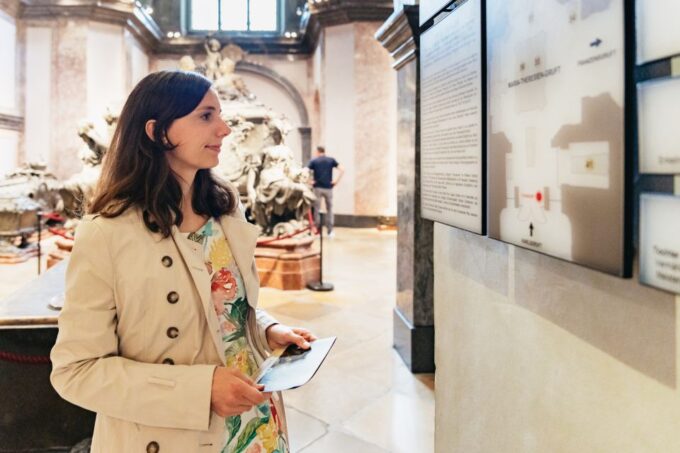
Audio guides are available for the Capuchins Crypt tour. Visitors can rent them to enhance their experience and learn more about the historical significance and features of this imperial burial site.
Vienna: Capuchins Crypt Entrance Ticket
“This place was beautiful. There were little booklets that gave details and information on the contents of the tombs. I cannot get over how beautifu…”
Recap
The Capuchins Crypt in Vienna offers a remarkable glimpse into Austria’s regal past.
Visitors can explore the final resting place of the Habsburg dynasty, admiring the lavish sarcophagi and funerary monuments that showcase the grandeur and imperial power of this illustrious royal family.
With 12 emperors, 19 empresses, and countless other royals interred within, the crypt stands as a testament to Vienna’s rich history and cultural heritage, preserved for over four centuries.
You can check availability for your dates here:


