
Franz Kafka’s Prague was the canvas upon which he painted his surreal literary masterpieces. Born and raised in the city’s diverse cultural landscape, Kafka’s life and works were inextricably linked to its tensions between Czech and German communities. Exploring the influential writer’s haunts – from the family home in Old Town to his final resting place in Josefov – offers a unique window into the formative experiences that shaped his existential exploration of alienation and absurdity. Uncovering the intricate interplay between Kafka’s Jewish heritage and the urban environment provides a compelling entry point to delve deeper into…
Key Points
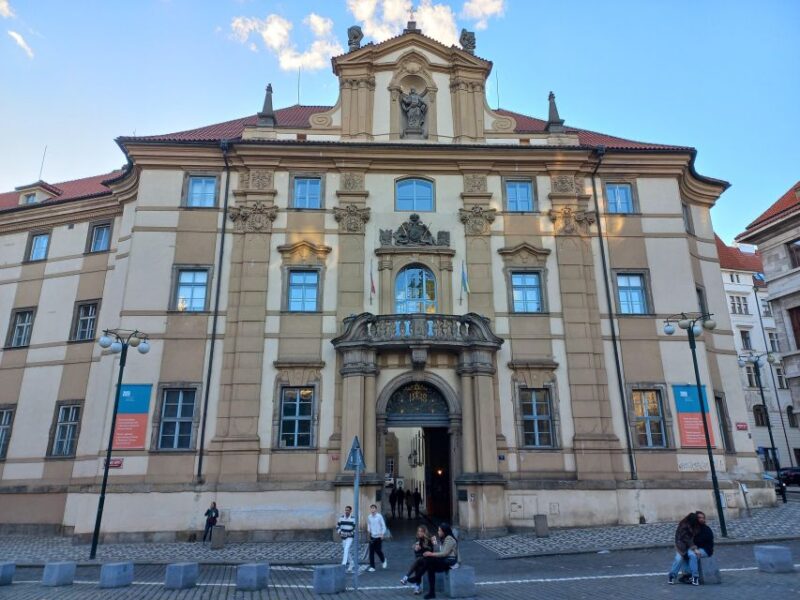
- The tour explores Kafka’s life and legacy in Prague, visiting key sites like his apartment, office, and grave.
- It provides insight into Kafka’s family, friends, and how his Jewish heritage influenced his distinctive literary style.
- Participants gain a contextual understanding of the historical, political, and urban landscape that shaped Kafka’s works.
- The tour highlights Kafka’s pioneering contributions to literature, including magical realism and the concept of "Kafkaesque."
- The immersive experience allows visitors to connect with Kafka’s legacy through guided tours, subway travel, and visits to significant locations.
Tour Overview and Details
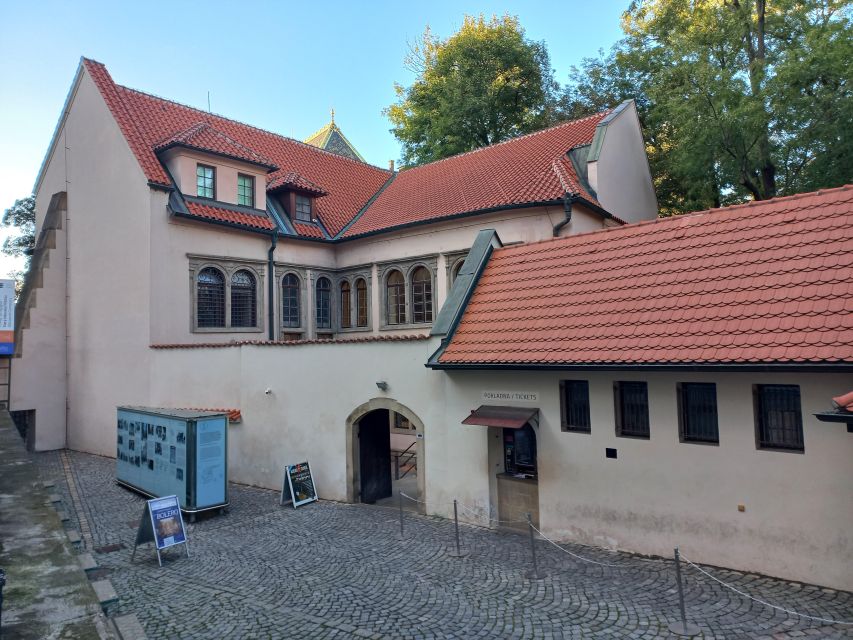
The tour offers an in-depth exploration of the life and legacy of renowned author Franz Kafka in Prague. Priced from $83.71 per person, the 2.5-hour tour is available in English, German, and French.
Wheelchair-accessible, it includes a guided walking tour, subway travel, a visit to Kafka’s grave, and a guided tour of Josefov, the historic Jewish quarter.
Participants will learn about Kafka’s life, family, friends, and literary contributions, as well as the historical, political, and urban context of his time.
With 2024 marking 100 years since Kafka’s death, this tour provides a timely tribute to one of Prague’s most celebrated authors.
You can also read our reviews of more tours and experiences in Prague.
Itinerary Highlights
Starting in Prague’s Old Town, the tour takes participants on a guided walking exploration (1 hour) through the neighborhoods where Kafka lived, studied, and worked.
The group then travels by subway/metro (20 minutes each way) to Vinohrady and Josefov.
They’ll visit Kafka’s grave, spending 20 minutes there, before embarking on a guided tour of the Josefov district for 30 minutes.
The tour ends back at the starting location in Old Town.
Along the way, travelers will learn about Kafka’s life, family, friends, and literary contributions, as well as the historical, political, and urban context of his time.
Experience and Learning
This tour offers travelers an immersive experience, allowing them to explore the locations where Franz Kafka lived, studied, and worked.
Guests will learn about Kafka’s life, family, friends, and literary contributions, gaining a deeper understanding of the historical, political, and urban context of his time.
With 2024 marking 100 years since Kafka’s death, this tour provides a timely tribute to one of the most influential writers of the 20th century.
Through the guided walking tour, subway/metro travel, and visit to Kafka’s grave, you will have the opportunity to connect with Kafka’s legacy and the vibrant city that shaped his remarkable literary works.
Locations Exploring Kafka’s Life
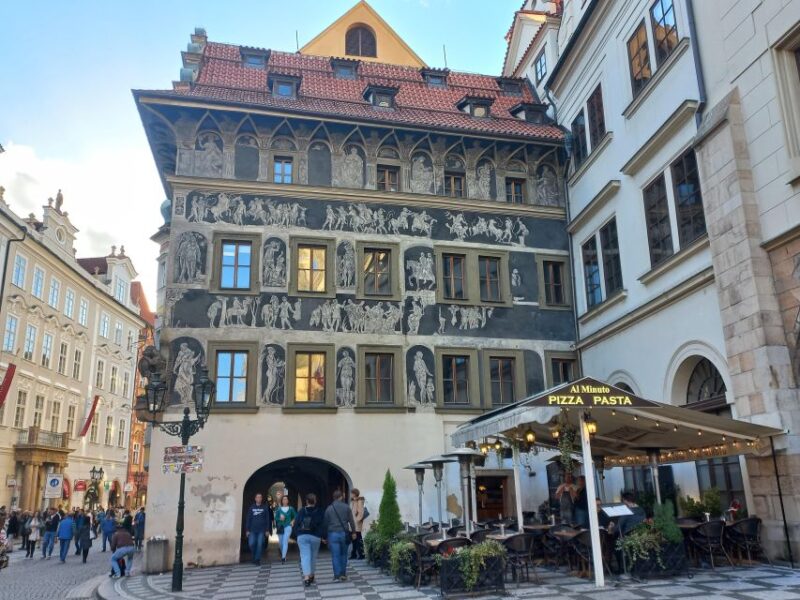
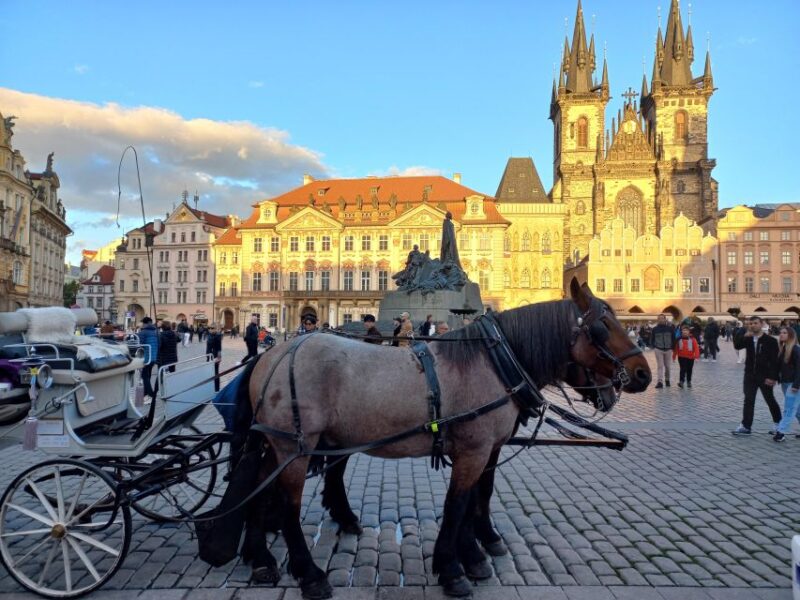
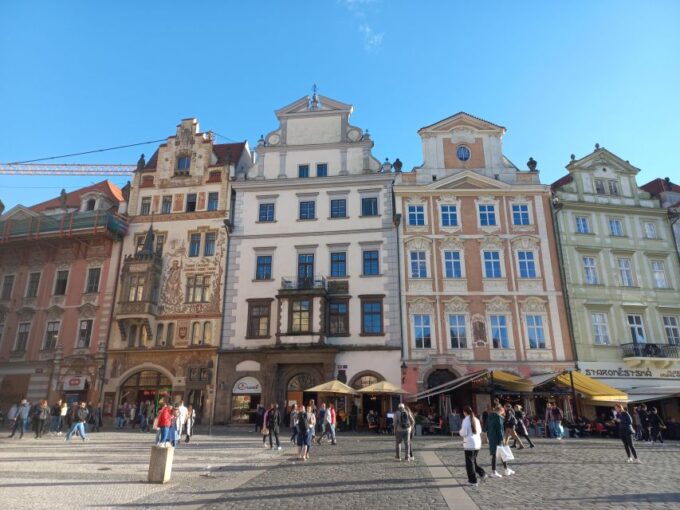
Visitors on this tour begin their Kafka-inspired exploration at the Old Town Square in Prague, where Kafka spent much of his youth.
The group then travels via metro to Vinohrady, where Kafka lived, and Josefov, the Jewish Quarter where he’s buried.
Key locations on the tour include:
- Kafka’s apartment, where he wrote many of his famous works.
- The office building where Kafka worked as a bureaucrat.
- The cemetery where Kafka’s grave is located, a somber tribute.
- The synagogue and other historical sites in Josefov, providing context to Kafka’s Jewish heritage and its influence on his writing.
Kafka’s Family and Friends
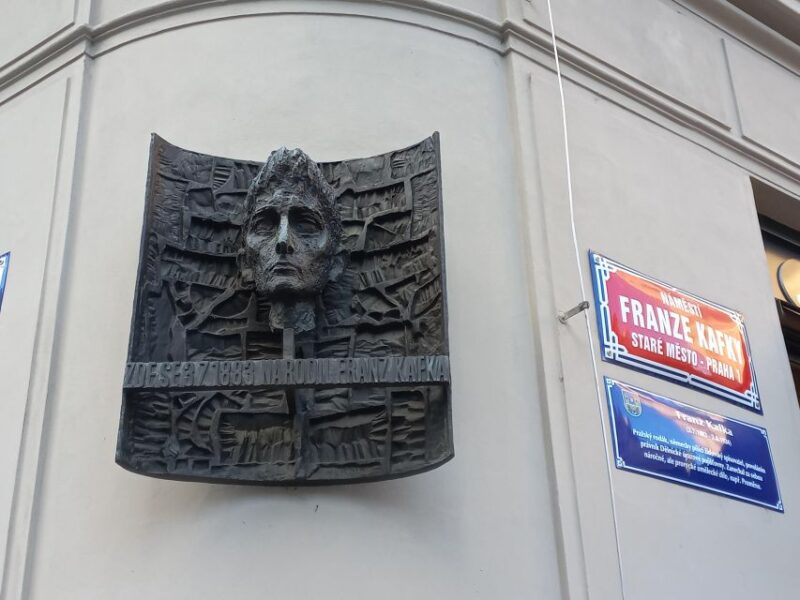
Franz Kafka’s family and friends played a pivotal role in shaping his life and literary works. His parents, Hermann and Julie Kafka, were influential figures who inspired much of his writing, including the themes of isolation and the father-son dynamic.
Kafka’s close friend Max Brod was instrumental in preserving and publishing his works after his death. Other notable acquaintances included the writer Franz Werfel and the philosopher Martin Buber.
These relationships, both nurturing and strained, provided Kafka with a complex social and emotional landscape that deeply informed his unique literary voice. Understanding Kafka’s intimate circles offers invaluable insight into the man behind the iconic Prague author.
Kafka’s Literary Contributions
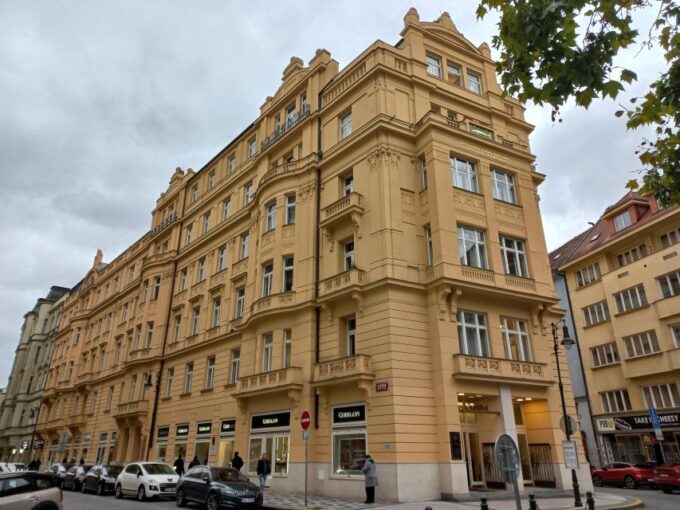
Known for his unique literary style and metaphorical exploration of the human condition, Kafka’s contributions to world literature are unparalleled.
His iconic works, including "The Metamorphosis," "The Trial," and "The Castle," explore themes of alienation, bureaucracy, and the absurdity of existence.
Kafka’s distinctive narrative voice and surreal imagery have profoundly influenced generations of writers and philosophers.
His literary legacy continues to be celebrated and studied worldwide.
Some of Kafka’s most renowned literary contributions include:
- Pioneering the genre of magical realism
- Introducing the concept of "Kafkaesque" – depicting the individual’s helplessness against oppressive bureaucratic forces
- Exploring the complexities of the human psyche and the search for identity
- Challenging conventional narrative structures and literary conventions
Historical and Urban Context
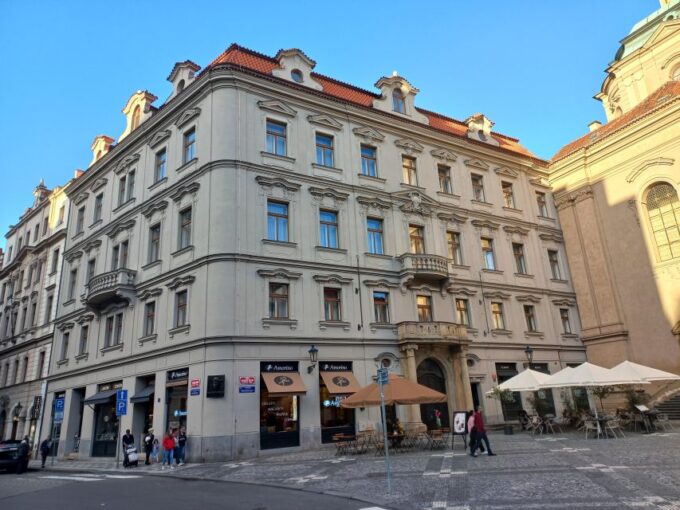
The historical and urban context of Prague during Kafka’s lifetime profoundly shaped his literary works. As the capital of Bohemia, Prague was a crossroads of cultures, languages, and political influences.
Kafka witnessed the tensions between the Czech majority and the German-speaking minority, as well as the rise of nationalism and antisemitism. The city’s medieval architecture, winding streets, and stark social divisions provided rich inspiration for Kafka’s surreal and allegorical stories.
His writings often explored themes of alienation, bureaucracy, and the individual’s struggle against impersonal forces. Kafka’s Prague was a place of duality, where modernity collided with tradition, and the rational coexisted uneasily with the absurd.
Important Information
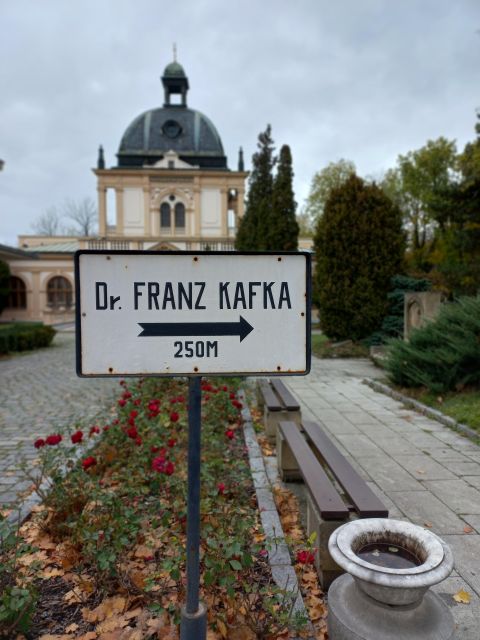
This walking tour operates in all weather conditions, ensuring participants can explore Kafka’s Prague regardless of the elements.
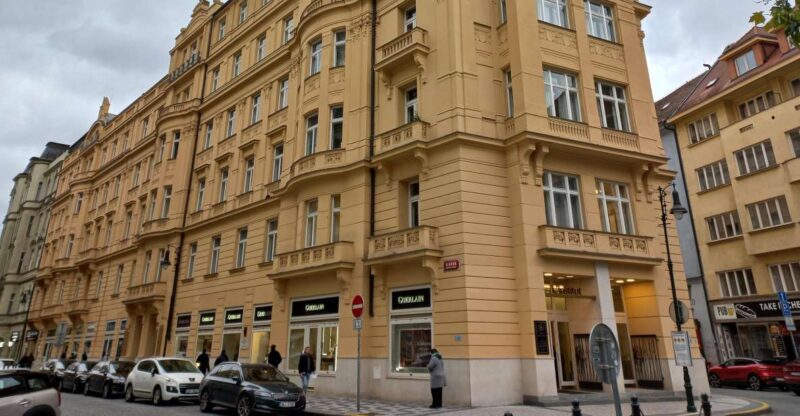
The meeting point is the Cartier shop at the corner of Old Town Square and Paris Street, where the guide will be holding a sign with the participant’s name.
A few important things to keep in mind:
- The tour is wheelchair accessible, allowing for inclusive exploration.
- Cancellations can be made up to 24 hours in advance for a full refund.
- The tour is offered in English, German, and French to accommodate diverse language needs.
- Subway tickets for transportation are included in the tour price.
Frequently Asked Questions
What Were Kafka’s Favorite Cafes and Bars in Prague?
Kafka was known to frequent several cafes and bars in Prague, including the Cafe Louvre, Cafe Montmartre, and the Golden Tiger. These establishments provided him with a space to write and socialize with fellow artists and intellectuals.
Did Kafka Have Any Close Relationships Outside His Family?
Kafka did have close relationships outside his family, particularly with writers and intellectuals. He was close friends with Max Brod, who became his literary executor, and had relationships with several women, though none of them resulted in marriage.
How Did Kafka’s Writing Style Evolve Over His Lifetime?
Kafka’s evolved from more conventional narratives to increasingly experimental, surreal, and allegorical forms that explored the human condition. His later works, like "The Metamorphosis," showcased his unique authorial voice and psychological depth.
What Were Kafka’s Thoughts on the Political Climate of His Time?
Kafka witnessed the political upheaval of early 20th-century Prague, which influenced his writing. He was critical of authoritarian power structures and bureaucracy, themes reflected in his surreal, darkly humorous works exploring the individual’s struggle against oppressive forces.
Were There Any Notable Events in Kafka’s Life That Are Not Often Discussed?
Kafka’s lesser-known events include his brief stint as an insurance clerk and his passion for photography, which he used to document his everyday life. These facets provide insight into Kafka’s multifaceted personality beyond his renowned literary works.
Recap
Franz Kafka’s life and works were deeply intertwined with the city of Prague. His experiences in this culturally complex environment shaped his themes of alienation and absurdity, which continue to resonate worldwide. Exploring the landmarks associated with Kafka’s personal and literary journey offers valuable insights into the influential author’s creative vision and the historical context that molded it.
You can check if your dates are available here:More Tour Reviews in Prague
Not for you? Here's more things to do in Prague we have recnetly reviewed
- 7 Best Canoe And Kayak Experiences In Prague
- 16 Best Christmas Experiences In Prague
- 25 Best Cruises And Boat Tours In Prague
- 25 Best Dining Experiences In Prague
- 25 Best Food Tours In Prague
- 16 Best Full-Day Tours In Prague
- 4 Best 2 Day Tours In Prague
- 2 Best Coffee Tours And Tastings In Prague
- 15 Best Massage And Relaxation Services In Prague
- 20 Best Photography Experiences In Prague
- 13 Best Craft Beer Tours And Tastings In Prague
- 25 Best Dinner Tours In Prague